
Disclosure Day Ending Explained: What Margaret’s Final Word Really Means
Steven Spielberg’s alien-contact thriller closes on one whispered word instead of a twist. Here’s the full Disclosure Day ending explained: the childhood reveal, the newsroom broadcast, Noah Scanlon’s fate, and what it means for a sequel.
Major Spoiler Warning
This Disclosure Day ending explained breakdown discusses the full third act in detail, including the final broadcast, the Daniel-Margaret backstory, and what happens to every major character. If you haven’t watched the film yet, bookmark this and come back after.
Quick Facts Before We Dive In
| Margaret Fairchild | Emily Blunt |
| Dr. Daniel Kellner | Josh O’Connor |
| Noah Scanlon | Colin Firth |
| Hugo Wakefield | Colman Domingo |
| Jane Blankenship | Eve Hewson |
| Studio | Universal / Amblin |
| Filmi Galaxy Rating | ⭐ 3.5 / 5 |
Every Spielberg alien movie eventually asks the same question: once we know we’re not alone, what do we actually do about it? Disclosure Day answers that question by refusing to answer it, and that’s the single choice this entire ending hinges on. If you left the theatre with more questions than closure, this Disclosure Day ending explained guide walks through exactly what happens, what it means, and why the film wanted you to feel that way.
How the Disclosure Day Climax Actually Plays Out
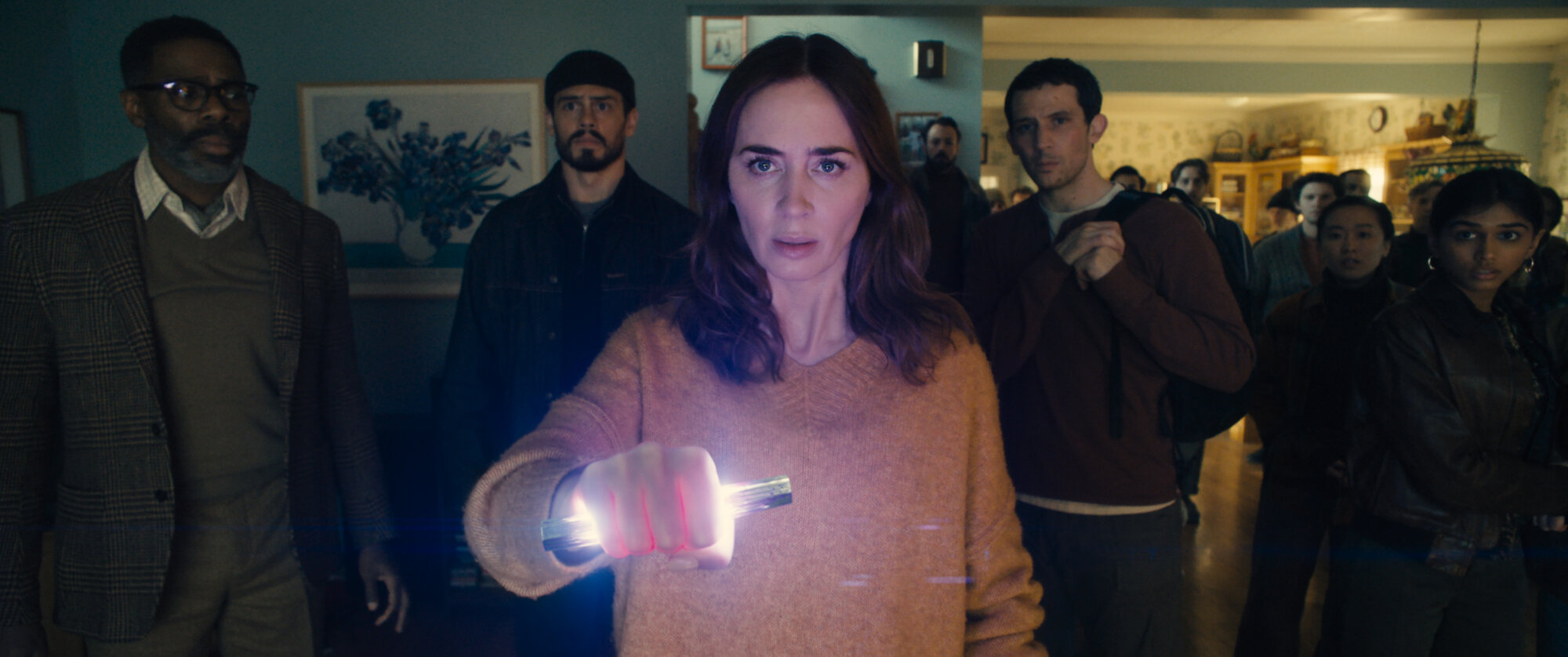
The film’s final stretch pulls its three leads cybersecurity specialist Daniel Kellner, Kansas City meteorologist Margaret Fairchild, and Wardex defector Hugo Wakefield toward a single goal: getting decades of buried evidence onto a live broadcast before Noah Scanlon’s people can shut it down. The backdrop is a world already teetering toward a separate nuclear crisis, which Spielberg uses less as a ticking-clock gimmick and more as proof of his real argument that humanity’s habit of secrecy and suspicion is the actual villain of the film, not the aliens.
Structurally, it’s a smart inversion. Most alien-invasion blockbusters build their climax around survival. Disclosure Day builds its climax around a signal getting out in time. Scanlon and his Wardex operatives remain a physical threat right up to the final act, chasing Daniel and Margaret across a freight-train sequence and a black-site escape earlier in the film, but by the newsroom finale, the real obstacle has shifted from violence to time.
Watching it a second time reframes a lot of the earlier “strange occurrence” scenes: the cardinal bird that visits Margaret before her live-television meltdown, her sudden fluency in a language she’s never studied, the animal-disguised presences in the woods. None of it is random. The film is quietly building toward the idea that extraterrestrial intelligence has been testing communication through smaller channels for decades before ever attempting to speak to a human directly.
The Daniel and Margaret Childhood Twist, Explained
No Disclosure Day ending explained breakdown is complete without this reveal, since it’s what the entire finale is built on. The film’s biggest structural reveal arrives inside Hugo’s warehouse, where a reconstructed version of Margaret’s childhood home helps her recover a memory she’s spent her whole life suppressing: she and Daniel were both taken as children, years apart, in an encounter neither of them consciously remembered. In Disclosure Day’s own vocabulary, they’re “experiencers,” abductees who were, in effect, quietly prepared as translators between an alien intelligence and the rest of the human race.
That backstory recontextualises both leads’ abilities. Daniel’s instant fluency with the alien mathematics isn’t a random superpower; Hugo frames it as fluency in the language the universe itself is written in. Margaret’s supercharged empathy, her ability to read intentions and calm hostile strangers down mid-chase, is framed the same way: a gift specifically engineered so she could understand, and eventually be understood by, whatever is on the other end of first contact. It’s the part of the plot that demands the most patience from the audience, and the film knows it; this is the reveal that rewards you if you sit with it; the reveal is the film asking for trust in exchange for the plot’s biggest emotional payoff.
The Newsroom Scene and What “Listen” Actually Means
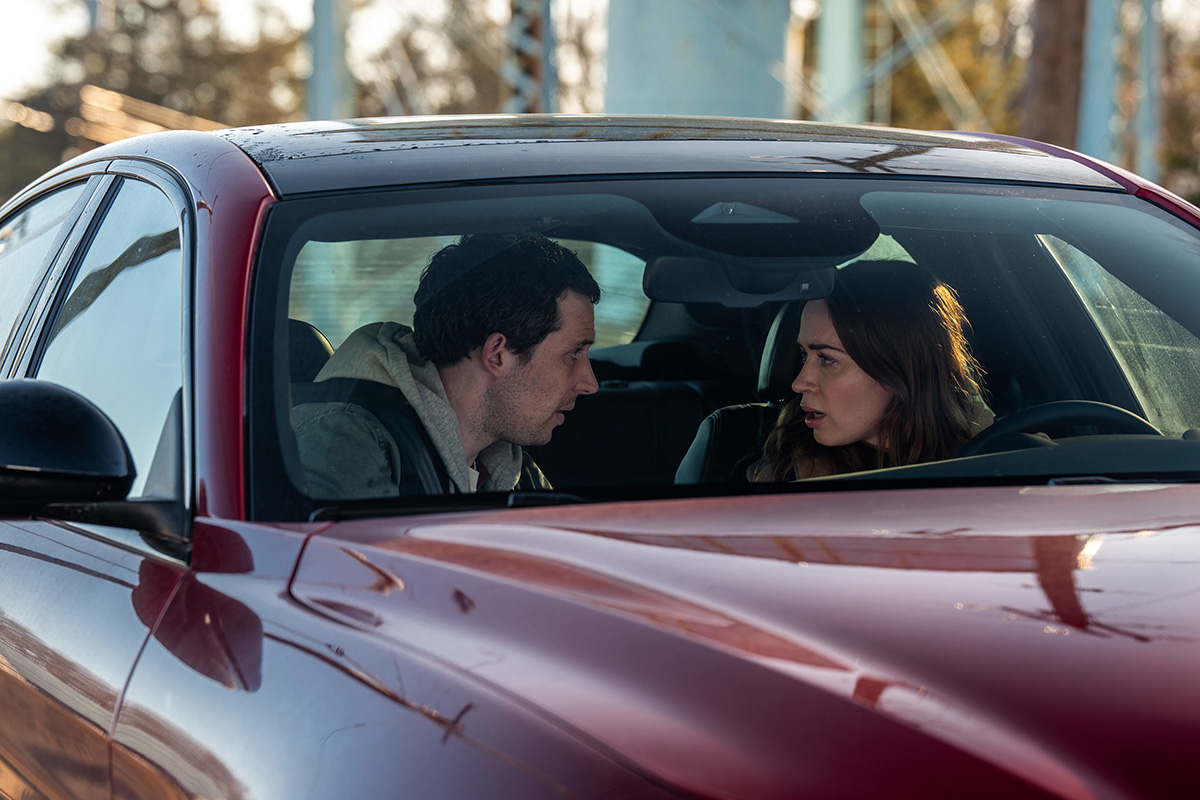
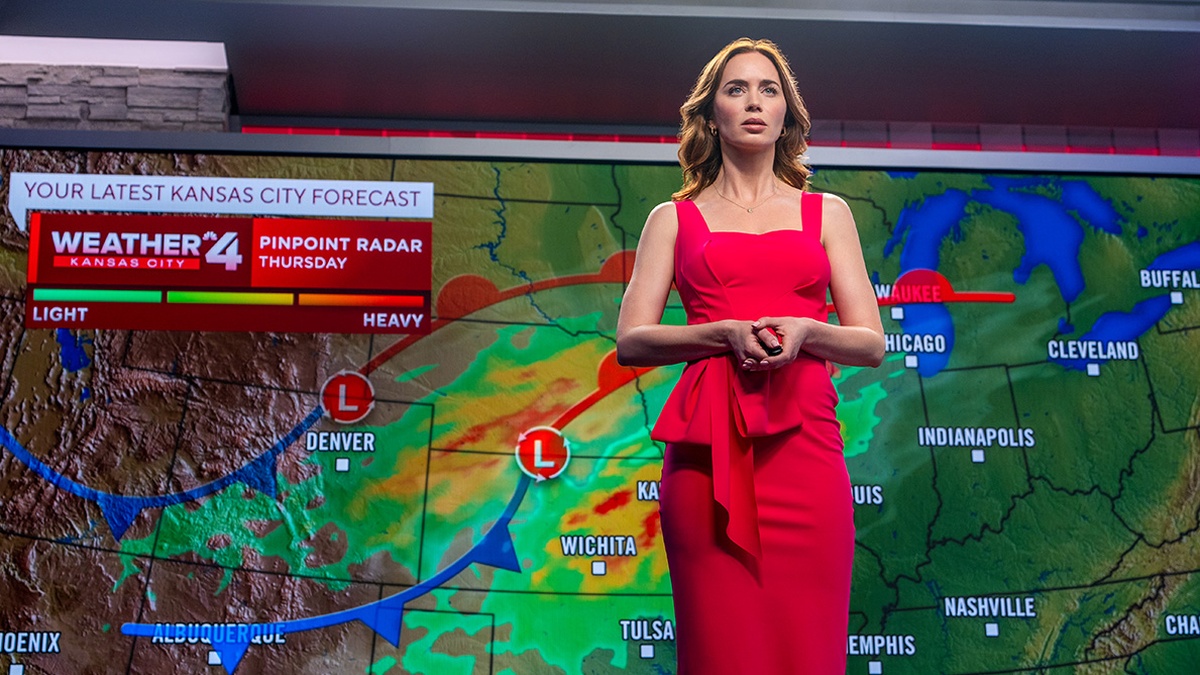
The disclosure itself happens from Margaret’s own KCXE newsroom, the same desk where her powers first went public months earlier, which gives the ending a clean, almost symmetrical shape. Daniel uploads the stolen Wardex footage, spanning roughly eight decades of covered-up contact, directly to a satellite feed. At the same time, a visibly shaken anchor tries to narrate evidence nobody was prepared to see live. Even the looming war the film has been building in the background appears to pause.
Then Hugo delivers the second gut-punch: an actual extraterrestrial being, aged and visibly worn down from years in Wardex custody, wheeled directly into the studio. It whispers to Daniel, who is able to parse the communication almost mathematically. Rather than speaking the message aloud himself, Daniel passes it to Margaret. She turns back to the camera, faces a global audience of billions, and says a single word: “Listen.” The screen cuts to black before she says anything more.
It’s a deliberately anticlimactic note to end a summer alien blockbuster on, and that’s the point. Spielberg isn’t withholding the alien’s full message to bait a sequel. According to statements from both Spielberg and Koepp around the film’s release, the project draws heavily on real-world UAP testimony and sighting reports rather than pure science-fiction invention, and that grounding shows in how seriously the ending treats the aftermath of disclosure over the spectacle of it. The unfinished sentence is the actual thesis: proof isn’t the hard part. Willingness to listen is.
What Happens to Noah Scanlon
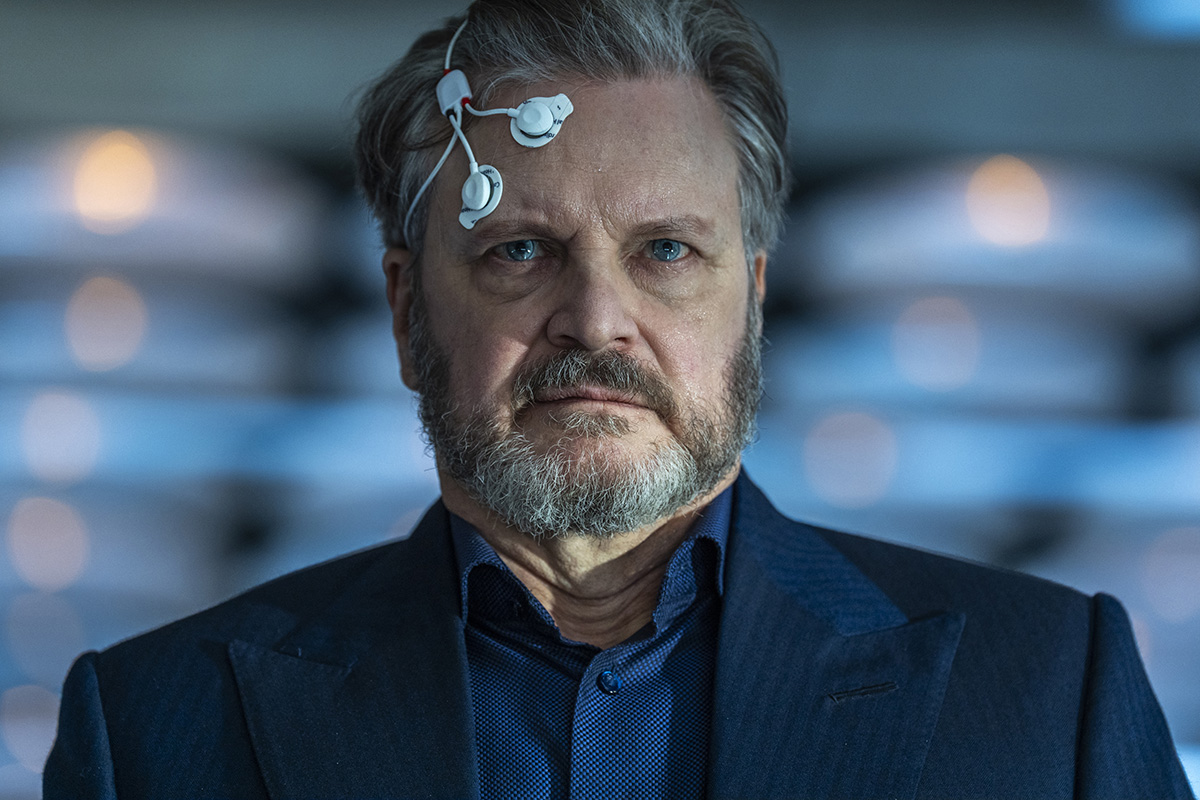
Of everything the Disclosure Day ending resolves, Scanlon’s arc is the quietest and maybe the most pointed. Colin Firth’s Noah Scanlon doesn’t get a conventional villain’s ending. There’s no final showdown, no arrest, no death scene. He’s a man who has spent decades operating on the belief that ordinary people cannot be trusted with the truth about Wardex and what it’s been hiding since Roswell, and the ending simply proves him wrong in real time. The broadcast goes out. The world doesn’t collapse into the panic and chaos he spent his career predicting; it absorbs the shock, argues about it, and keeps moving. That’s a quieter defeat than most conspiracy-thriller antagonists get, and it’s consistent with how restrained this entire third act chooses to be.
What the Disclosure Day Ending Actually Means
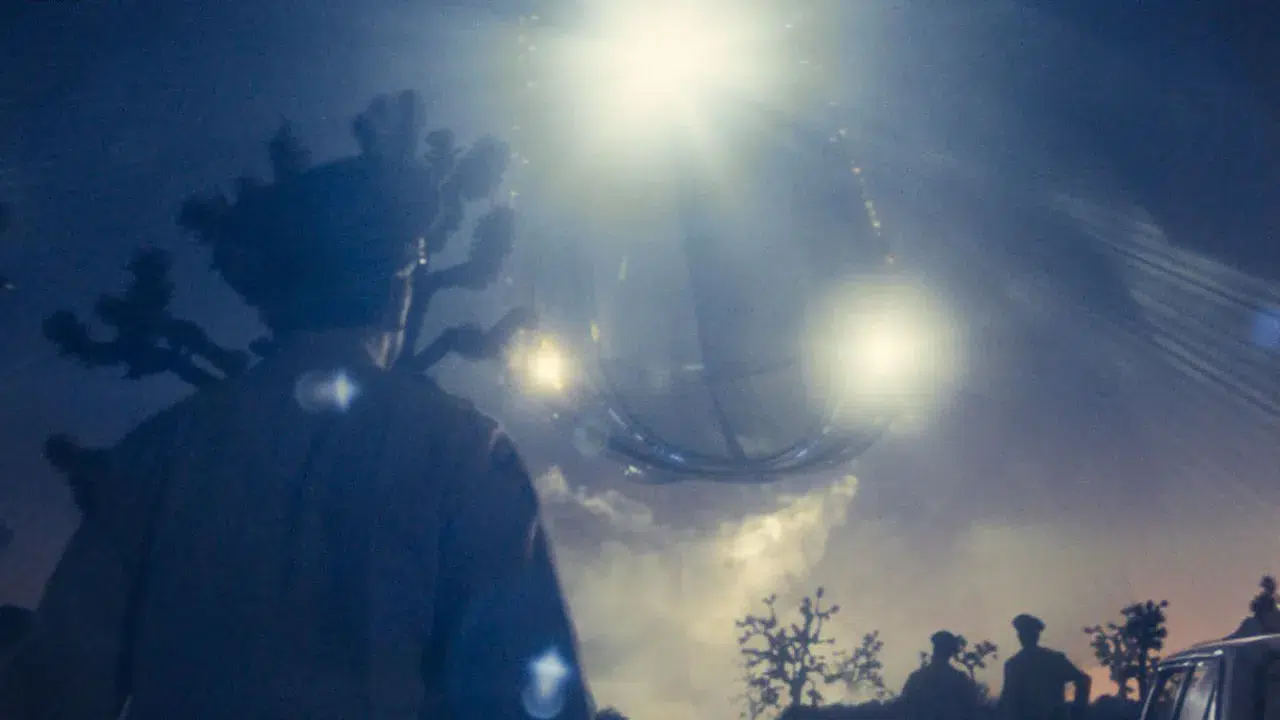
Strip away the extraterrestrial mythology and Disclosure Day’s ending is making a fairly simple, very Spielbergian argument: evidence doesn’t change people, but the choice to receive it can. The film could easily have closed on riots, denial, or a fresh cover-up replacing the old one. Instead it lingers on ordinary people — in kitchens, in offices, on sidewalks going quiet in front of their screens and choosing, if only for a moment, to take the information in rather than reject it outright.
The screenwriting team has also been open about leaving the film’s alien technology deliberately unexplained, on both the characters’ end and the audience’s. There’s a version of Disclosure Day that spends its final twenty minutes explaining exactly how the recovered Wardex device works and what every visual cue in the film meant. This isn’t that film, and that restraint is the right call even when it occasionally feels like the script is dodging its own homework. Spielberg and Koepp seem far more interested in the question of “now what” than in the mechanics of “how.”
Is There a Disclosure Day Sequel Coming?
The Disclosure Day ending is built to leave the door open without forcing it. Nothing has been officially confirmed, and neither Universal nor Spielberg had announced a follow-up as of this writing. But the ending is built to leave the door open without forcing it. First contact has technically happened, yet the film ends before the world has had any real time to process what comes next. If a sequel does eventually happen, the more interesting version isn’t another chase movie built around Wardex loyalists. It’s the one about what an entire planet does on the morning after.
Why the Disclosure Day Ending Divided Audiences
This is the most useful thing to know before you watch: the ending isn’t ambiguous, and it isn’t a twist in the conventional sense. It’s restrained on purpose, arriving after two hours of momentum that usually pays off with a louder, more explosive climax in this genre. Critic reaction has split roughly along those lines too: some reviews have praised Emily Blunt’s performance as a career highlight anchoring a hopeful, humanistic spin on Spielberg’s favourite themes, while others have found the back half’s narrative sprawl keeps the film from reaching the director’s very best work.
If you walked in wanting the secret to detonate the world, the quiet newsroom scene will feel like a deflation. If you walked in wanting to see what it would actually look like for ordinary people to be told an impossible truth and simply choose to listen, this ending does exactly what it sets out to do. That gap between expectation and execution is a large part of why FilmiGalaxy landed on a 3.5 and not higher.
Disclosure Day Ending Explained: FAQs
What does Margaret’s final word “Listen” mean?
Margaret never repeats the alien’s full message on screen. “Listen” is the film’s argument compressed into a single word — proof alone doesn’t change humanity, but willingness to receive it can. It’s a deliberate thematic choice, not a withheld cliffhanger for marketing purposes.
Is Disclosure Day connected to Close Encounters of the Third Kind?
No. Despite fan theories fuelled by the marketing campaign, Spielberg has confirmed Disclosure Day is not a sequel or secret prequel to Close Encounters. It shares thematic territory and his signature “gaze up in wonder” visual language, but it’s a standalone story.
What happens to Noah Scanlon at the end?
Noah Scanlon isn’t killed or arrested in a climactic showdown. His defeat is quieter — the disclosure he spent his career trying to prevent goes out, and the global panic he predicted simply doesn’t happen, proving him wrong in real time.
Who are Daniel Kellner and Margaret Fairchild?
Daniel Kellner (Josh O’Connor) is a cybersecurity specialist who steals evidence from the Wardex Corporation. Margaret Fairchild (Emily Blunt) is a Kansas City TV meteorologist. Both were abducted as children decades apart and revealed to be “experiencers” — people shaped to help translate between humanity and extraterrestrial intelligence.
Is there a Disclosure Day sequel confirmed?
Not officially. The ending is deliberately structured to leave room for a follow-up without forcing one, closing on the moment right after first contact rather than a hard cliffhanger.
What is the Wardex Corporation in Disclosure Day?
Wardex is the secretive organisation at the centre of the film’s conspiracy, responsible for covering up human-alien contact dating back to Roswell in 1947 and reverse-engineering recovered alien technology. It’s run by Noah Scanlon and ultimately exposed by defector Hugo Wakefield.
Disclosure Day Ending Explained – Filmi Galaxy

Director: Steven Spielberg
3.5

 using WordPress and
No responses yet