
The Odyssey Ending Explained: Athena’s Secret, the Bow Contest, and Why Odysseus Leaves
Read our full spoiler-free review first if you haven’t seen the film. Everything below this line is spoilers, all the way through the final shot.
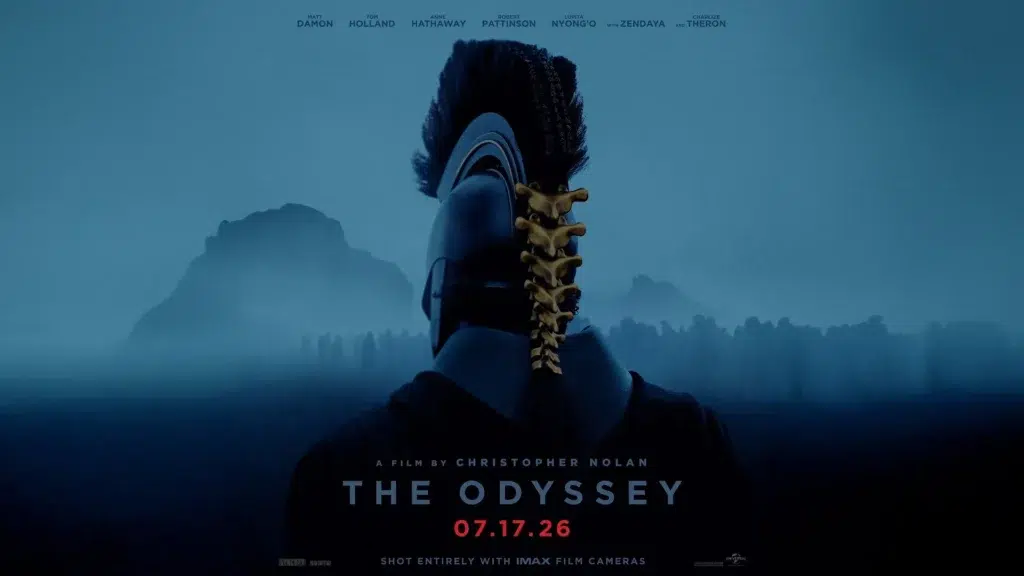
Christopher Nolan’s Odyssey ending closes on a choice, not a fight scene. Here’s the full Odyssey ending explained: the bow contest, the twist behind Zendaya’s Athena, what happens to the suitors, and the quiet, strange final shot that’s splitting audiences more than anything else in the film.
Major Spoiler Warning
This The Odyssey ending explained breakdown covers Christopher Nolan’s film in full, including the identity of “Athena,” the bow contest, and the final scene. Turn back now if you haven’t watched it.
What Happens at the End of The Odyssey?
If you came looking for The Odyssey ending explained in the simplest terms, the homecoming gives Odysseus his family back but not the old life or power he expected to reclaim.
Odysseus wins Penelope’s bow contest, proves his identity with the golden Athena pin she gave him before Troy, and kills the suitors with Telemachus’s help. Telemachus is ultimately crowned king, while Odysseus gives up his throne and sails away with Penelope instead of staying to rule. That last part is Nolan’s biggest deviation from Homer, where Odysseus reclaims his crown and simply stays home. Here, home isn’t where the story ends; it’s where Odysseus finally admits he doesn’t deserve to stay.
How Do We Get to the Ending? A Quick Recap
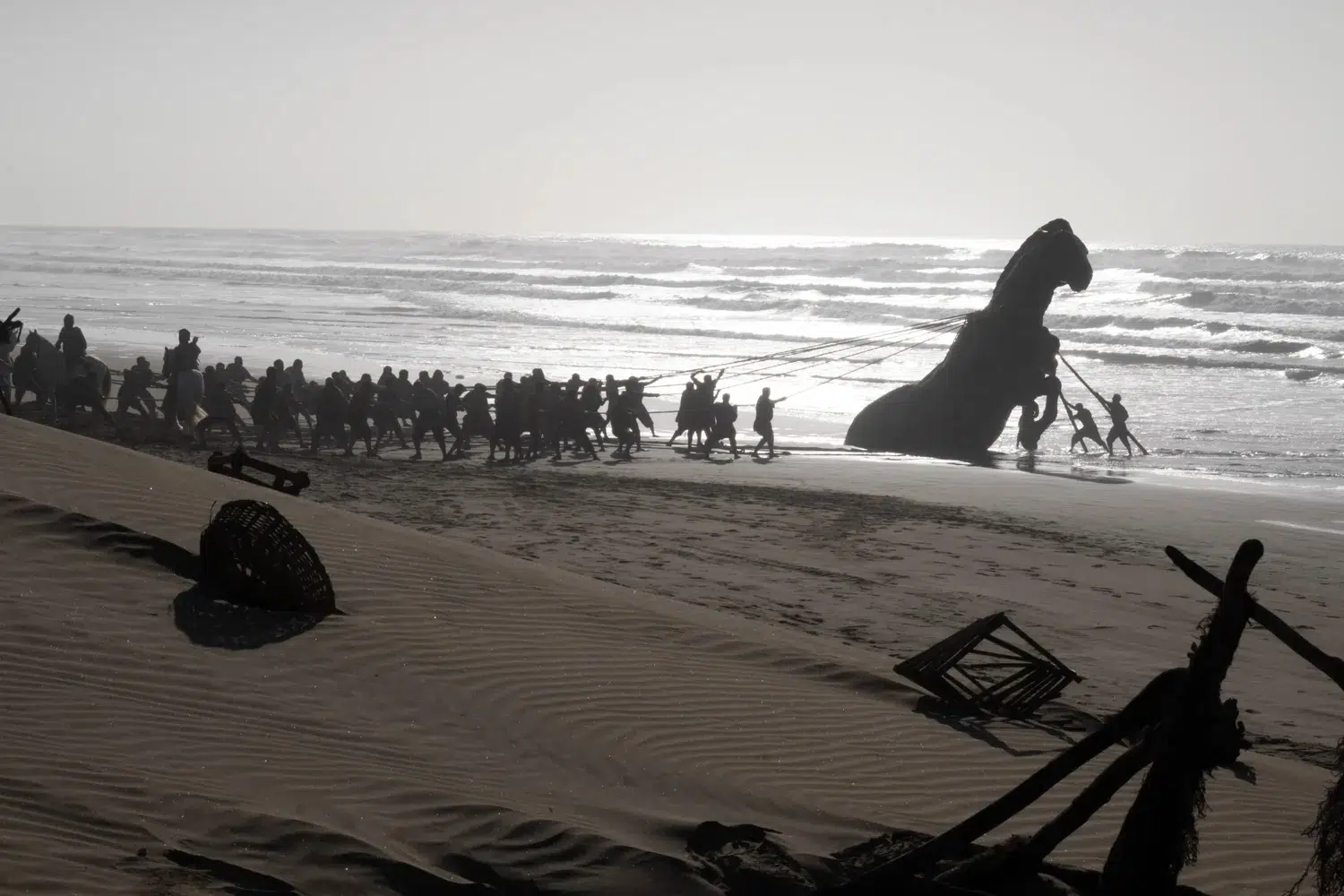
Twenty years after leaving for the Trojan War, Odysseus (Matt Damon) still hasn’t come home. His son Telemachus (Tom Holland) is being edged out of his own house by a pack of suitors led by Antinous (Robert Pattinson), all pressuring his mother, Penelope (Anne Hathaway), to remarry and hand over Ithaca to a new king. Telemachus sails to Sparta to ask Menelaus (Jon Bernthal) and Helen (Lupita Nyong’o) for word of his father, while Antinous, tipped off by his lover, one of Penelope’s handmaids, played by Mia Goth, sends men to assassinate Telemachus on the road.
Meanwhile, we finally see how Odysseus’s decade at sea went: the Trojan Horse plan, engineered using a soldier named Sinon (Elliot Page) as bait; the curse from blinding the Cyclops Polyphemus; Circe turning his men into pigs; a detour through the Underworld where Sinon’s ghost and Agamemnon’s ghost both warn him what guilt and homecoming actually cost; and finally seven lost years on Calypso’s island, where Calypso keeps him drugged with lotus flowers until he forgets who he is, before she chooses to restore his memory and let him go.
Back in Ithaca, a disguised Odysseus reconnects with Telemachus (whom he saves from the ambush that kills his old tutor Mentor), reveals himself to his son, and starts quietly preparing to reclaim his home.
The Bow Contest and the Slaughter of the Suitors, Explained
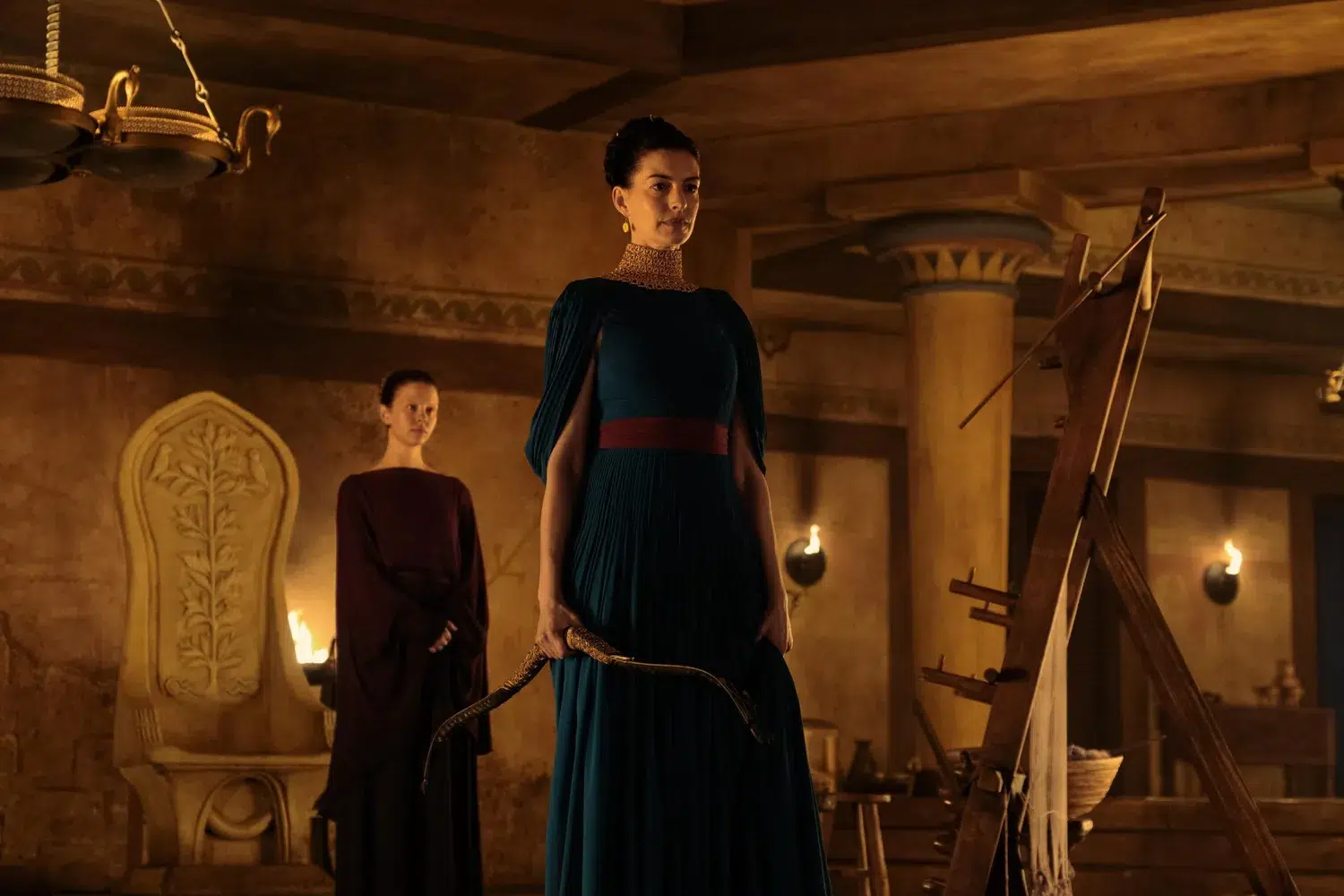
Penelope sets the contest herself. She tells the suitors she’ll marry whoever can string Odysseus’s old bow and make the shot only he could make. One by one, they fail. The disguised Odysseus steps forward, strings the bow with ease, and succeeds. But Nolan changes what happens next from Homer’s version. Instead of Penelope testing him with the secret of their immovable marriage bed, Odysseus proves who he is with the golden Athena pin she gave him before he left for Troy a private detail that finally confirms the man standing before her is really her husband.
What follows kills Antinous and turns the homecoming into another act of bloodshed. For us, that creates the ending’s most interesting tension. The film has spent so much time forcing Odysseus to confront what violence did to him at Troy, yet his return still culminates in violence against the suitors. You can read that as necessary reckoning, catharsis, or evidence that Odysseus has not escaped the habits war taught him. Nolan leaves enough friction there that the ending never becomes a tidy moral victory.
Is Zendaya’s Athena Actually a Goddess?
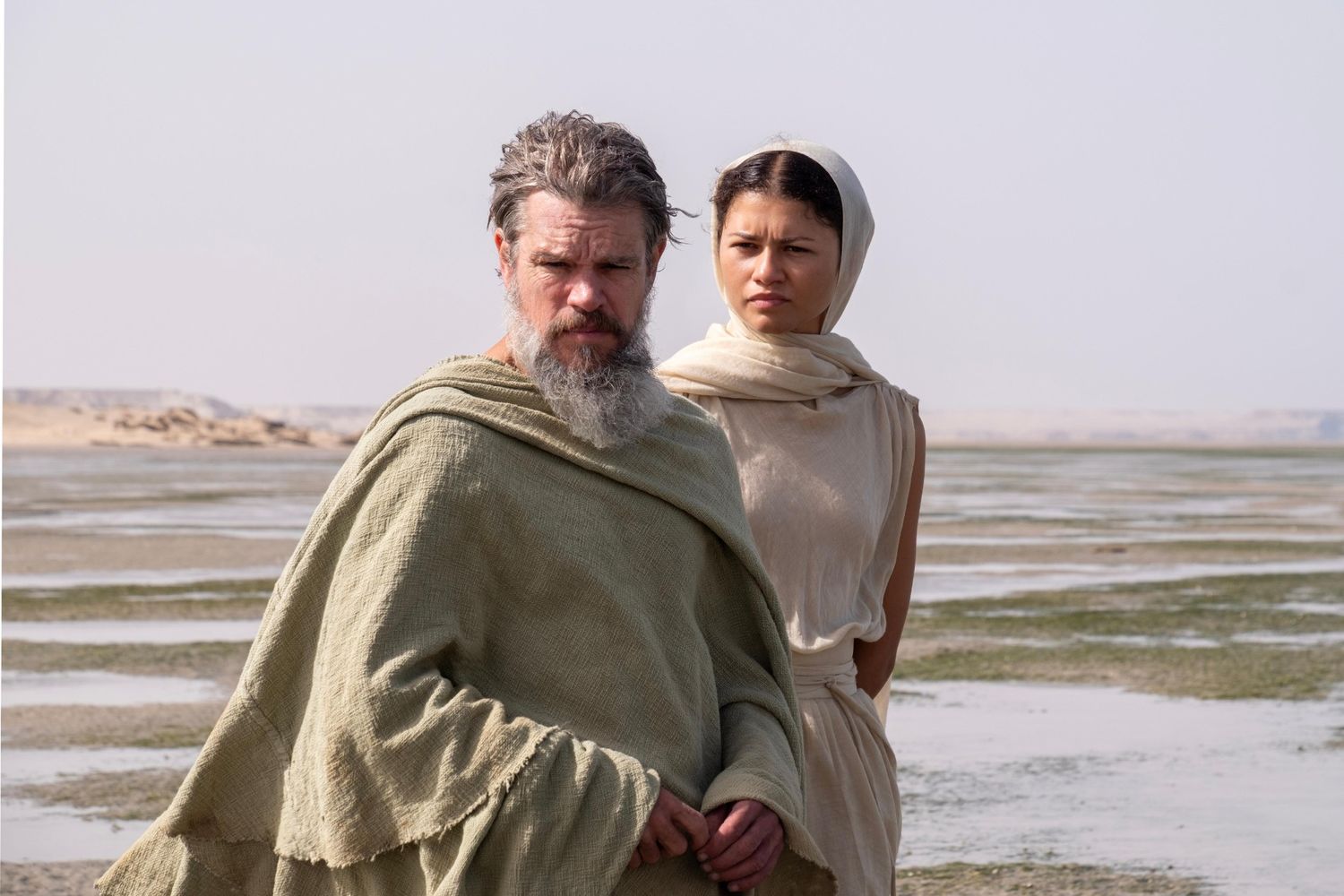
Deliberately unclear, and Nolan has a track record of keeping it that way. During the sack of Troy, Zendaya’s Athena is shown being beheaded as a young priestess, at the exact moment a statue of the goddess is destroyed in the same temple. From that point on, every vision of “Athena” that Odysseus experiences wears that same priestess’s face.
What the film doesn’t resolve is which of two readings is correct: that Odysseus has simply been hallucinating his own guilt wearing a familiar shape the entire journey, or that Athena herself was genuinely present in that priestess and has been appearing to him ever since as a wounded, human version of herself. Multiple outlets covering the ending land on different sides of that question, and Nolan is on record saying that explaining Memento’s ambiguous ending years ago taught him never to spell out an ending again, so a direct answer from him isn’t coming. In a Vulture interview, Nolan and Matt Damon instead framed the reveal around delayed consequences, drawing an explicit line to the themes of Oppenheimer: actions people take can detonate long after they think the danger has passed.
Either reading supports the same larger point. Whether it’s guilt given a face or a goddess reduced to one, the effect is the same: Odysseus never actually gets divine spectacle on this journey, only the quiet, human cost of what he did at Troy following him home.
What Was the Deal With Sinon and the “Sinon” Alias?
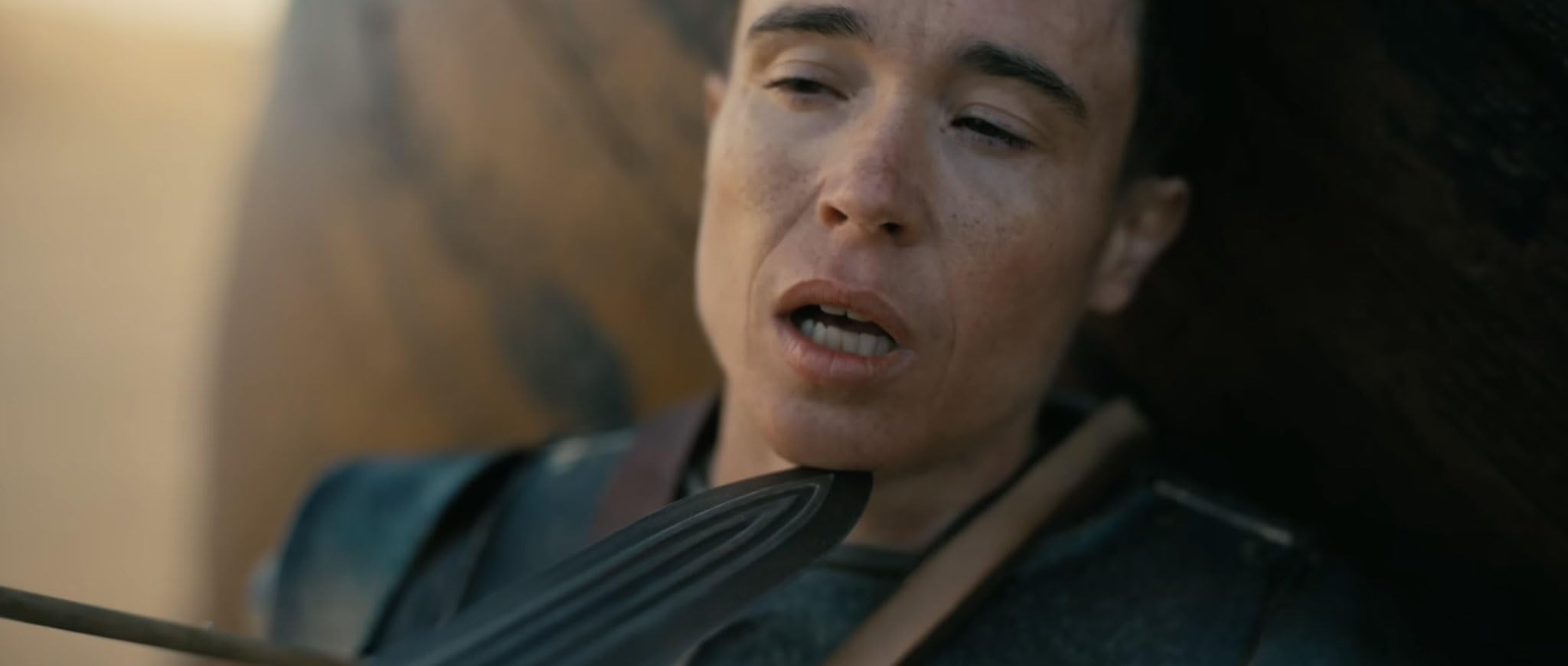
Sinon is the human cost of the Trojan Horse trick, and Odysseus uses his name as a private confession only Antinous is meant to understand. In the Underworld, Sinon’s ghost confronts Odysseus for using him as a disposable pawn. Sinon was the soldier sent to fool the Trojans into dragging the horse inside the walls, and he was killed immediately afterward. But Sinon’s connection to Antinous goes back even further: when Antinous was selected to go to war, he persuaded Sinon to take his place, promising to look after his family in return. That promise was never kept, tying Ithaca’s current villain directly back to one of the men Odysseus sacrificed at Troy.
Later, when the disguised Odysseus secretly saves Telemachus from the ambush, he identifies himself to the attackers only as Sinon. It’s a coded threat aimed squarely at Antinous, a way of saying I know exactly what you did, and I know exactly what that name cost before Antinous even realizes his enemy is already home.
Why Does Odysseus Blind and Then Shoot the Cyclops?
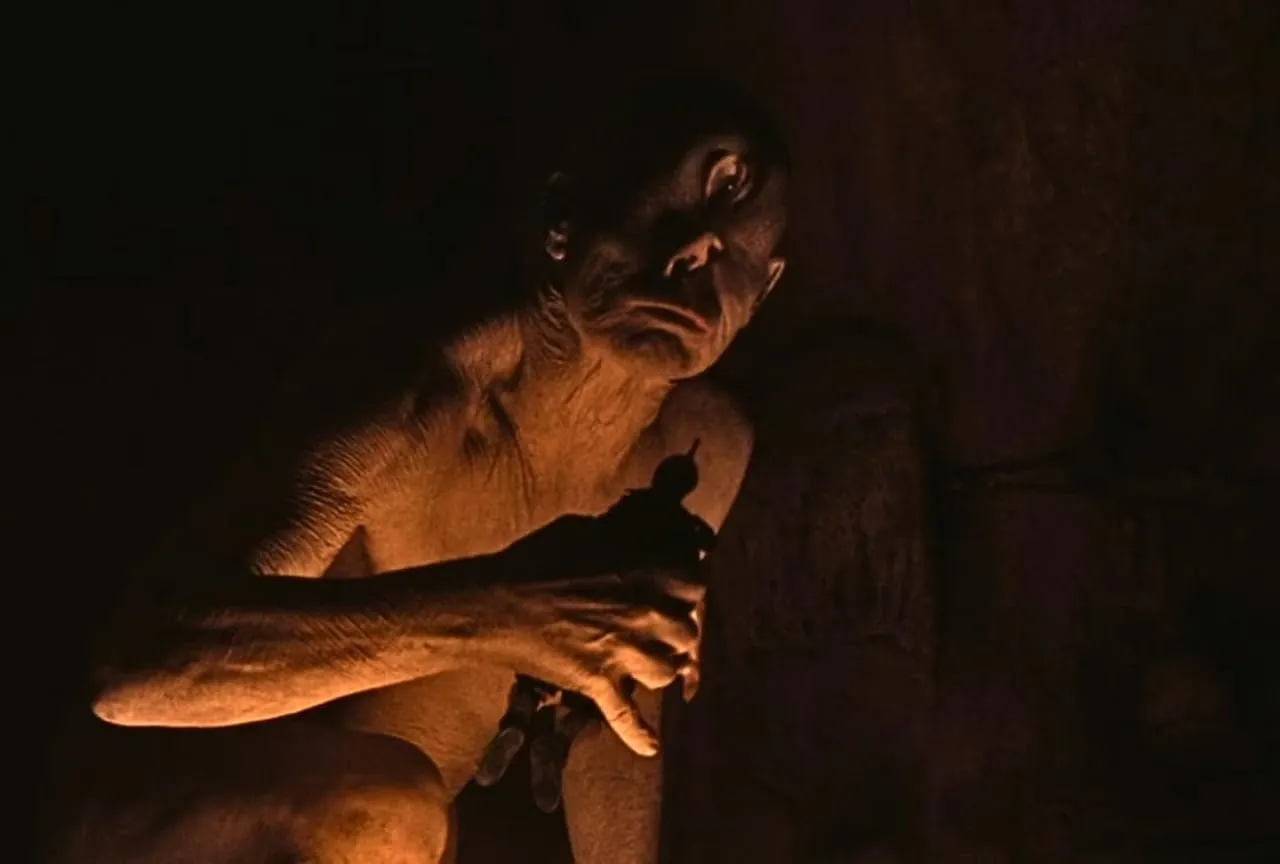
Nolan swaps Homer’s sin of pride for a colder one of cruelty. In the poem, Odysseus’s crucial mistake is boasting his real name to a wounded Polyphemus, inviting Poseidon’s wrath out of arrogance. The film changes this: after blinding the Cyclops, Odysseus fires an arrow into him while he’s already helpless. It’s a small but pointed change: Odysseus isn’t punished for being too proud of a clever escape; he’s punished for choosing cruelty when he no longer needed to.
Why Does Odysseus Give Up His Throne?
Because the film treats his entire journey as a confession, not a victory lap. Before revealing himself to Penelope, disguised Odysseus admits to her without saying it’s himself that her husband is alive but carrying crushing guilt over what he did at Troy, including violating Zeus’s Law of hospitality with the Horse and desecrating Athena’s own temple in the process. That confession is the film’s real emotional climax, more than the bow contest that follows it.
Once the suitors are dead, Telemachus is ultimately crowned king, while Odysseus leaves Ithaca with Penelope instead of reclaiming the throne for himself. Read alongside his confession, the choice suggests that a man who has broken that law as badly as he has no longer sees himself as fit to rule in its name. Telemachus, who spent the whole film learning the version of leadership his father failed at, inherits the kingdom instead. It reframes twenty years of “trying to get home” as something closer to a man who was never sure home was still his to claim.
What Does the Final Scene With Penelope Mean?
This is where The Odyssey ending explained becomes less about plot mechanics and more about what Nolan thinks a homecoming should cost.
Odysseus and Penelope leave Ithaca together, sailing west toward the setting sun, leaving Telemachus behind to rule. The detail that gives the moment real weight: sailing west with Penelope is shown to be something she herself once dreamed of, years earlier, back when news of the Trojan War first reached Ithaca, meaning the ending isn’t just Odysseus’s guilt finding an outlet; it’s also Penelope finally getting the life she pictured before the war ever took him from her. Earlier, in the Underworld, Odysseus was told his fate isn’t to simply stay home; he still owes something to the men who died under his command and were never properly honored. The ending lets him honor that debt with Penelope beside him rather than alone, which softens what could have been a purely punishing exile into something closer to a shared penance. Whether they ever complete that voyage is left open; the film ends on the act of leaving, not arriving.
Is There a Post-Credits Scene in The Odyssey?
No. The film closes on the image of the burning Trojan Horse, followed by a dedication to IMAX collaborator David Keighley, who worked with Nolan on the film’s custom silent IMAX camera rig before passing away shortly after production wrapped. There is no additional footage after the credits roll.
FilmiGalaxy’s The Odyssey Ending Explained Take: Does It Work?
No. The straightforward reading of the ending is that Odysseus survives. He is badly wounded during the confrontation with the suitors, but the film then shows him leaving Ithaca with Penelope and sailing west while Telemachus becomes king. The final voyage can carry symbolic meaning, but the plot does not present Odysseus as having died.
Why Is The Odyssey’s Ending So Open to Interpretation?
The ending has sparked plenty of debate, but most of it isn’t about what literally happens. Odysseus survives, Telemachus becomes king, and Penelope leaves Ithaca with her husband. The real argument is over what those choices mean, particularly whether Odysseus’s final journey is redemption, self-imposed exile, or simply the next stage of learning to live with what he did at Troy.
Athena has generated even more discussion. Some viewers read her appearances as supernatural, with the murdered priestess becoming the human face through which the goddess reaches Odysseus. Others see her entirely as Odysseus’s guilt given a face. Nolan gives both readings enough evidence to work without confirming either one, which is exactly why the Athena question sticks with you after the credits.
FilmiGalaxy’s Take: Does the Ending Actually Work?
Mostly, and the parts that work outweigh the one big swing that doesn’t quite land. Here’s our honest read, weighing the plot mechanics against how critics and audiences have actually responded.
The confession-before-reveal scene, followed by Odysseus leaving the crown to Telemachus and sailing away with Penelope, is the strongest version of this ending Nolan could have made; it’s the rare modern epic willing to end on a character walking away from the reward the plot has been building toward. That’s a genuinely bold swing for a $250 million tentpole, and we’d argue it’s the single best storytelling decision in the entire film.
Where we’re less convinced: the bow-contest slaughter that follows that confession. Several critics have pointed out the same tension we noticed reading the reactions: a film spends nearly three hours arguing that violence and the violation of hospitality corrode everyone involved, then stages its own climax as a satisfying, applause-cued massacre. Odysseus gets to have his catharsis and his guilt in the same stretch of the ending, and the film doesn’t fully reconcile the two. It’s a real crack in an otherwise carefully built argument, not a dealbreaker.
On the Athena reveal specifically: we think leaving it genuinely ambiguous is the smartest choice in the script, not a cop-out. A clean she was just guilty all along would be tidier, but the film gets more out of refusing to pick; it’s the detail we’d point to if someone asked whether this adaptation actually has something new to say about the source material.
How Does This Ending Compare to Homer’s Original?
One reason The Odyssey ending explained needs a comparison with Homer is that Nolan keeps the bones of the homecoming while changing what its resolution means for Odysseus, Penelope, and Telemachus.
| Homer’s Odyssey | Nolan’s The Odyssey |
|---|---|
| Odysseus is restored to his household and kingship in Ithaca | Telemachus is crowned king while Odysseus and Penelope sail west |
| Athena openly intervenes as a goddess and protects Odysseus | Athena is filtered through the image of a murdered priestess, while the film leaves the divine or psychological reading open |
| Odysseus’s hubris is boasting his name to a wounded Cyclops | Odysseus’s cruelty is shooting an already-helpless Cyclops |
| Divine intervention helps end the cycle of revenge and restore order | Telemachus takes the throne while Odysseus and Penelope leave on a westward voyage |
What Is the Overall Message of The Odyssey’s Ending?
At its core, The Odyssey ending explained comes down to one question: can a celebrated war hero return home without answering for what he did to become a hero?
The ending suggests he can t. The men who win wars don t simply get to come home untouched someone still has to answer for what winning cost. Nolan spends the whole film building Odysseus s shame over Troy, particularly the Trojan Horse as a violation of xenia, the sacred law of hospitality, and the ending refuses to let a bow contest and a body count erase that debt.
That s where Nolan s interpretation of Odysseus becomes most interesting: war hero and war criminal can describe the same man; the difference is often which version of the story survives. Read that way, Telemachus taking the throne while Odysseus sails west isn t simply about giving up power. It suggests that survival isn t the same thing as innocence, and that finally making it home doesn t erase what you did to get there.
The Odyssey Ending Explained: FAQ
Is Zendaya really playing the goddess Athena?
It’s left deliberately ambiguous. She’s shown as a priestess beheaded during the sack of Troy at the same moment Athena’s statue is destroyed, but the film never confirms whether Odysseus was hallucinating his guilt or whether the goddess herself was present in her.
Why does Odysseus use the name “Sinon” later in the film?
Sinon was a soldier Odysseus used and sacrificed during the Trojan Horse plot. Using that name as an alias while saving Telemachus is a coded message aimed at Antinous, who manipulated Sinon into that role.
Why does Odysseus give up the throne of Ithaca?
He decides a man who violated Zeus’s Law of hospitality as badly as he did during the Trojan War doesn’t belong ruling in its name, and hands the crown to Telemachus instead.
Does Odysseus die at the end?
No. Odysseus is badly wounded, but the ending shows him alive and leaving Ithaca with Penelope while Telemachus becomes king.
Is there a post-credits scene? Is there a post-credits scene?
No. The film ends on the image of the burning Trojan Horse and a dedication to IMAX collaborator David Keighley.
How is this ending different from Homer’s poem?
The biggest change is that Odysseus doesn’t stay king; he abdicates to Telemachus and leaves Ithaca, whereas Homer’s poem ends with him restored to his throne.
Haven’t read our full verdict yet? Read the spoiler-free review of The Odyssey →

 using WordPress and
No responses yet